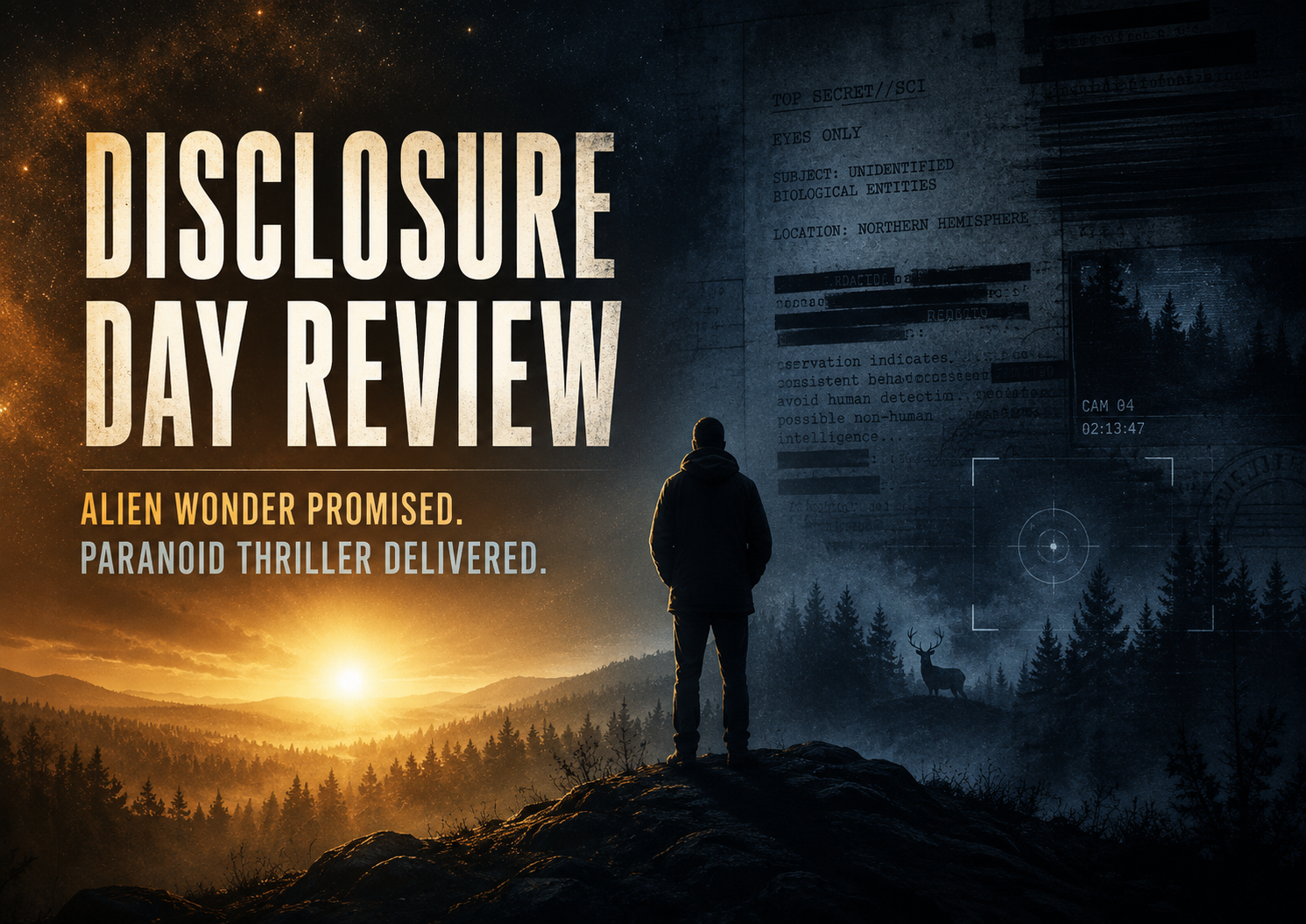

Steven Spielberg’s Disclosure Day landed a 79% on the Tomatometer, a wave of “another Spielberg classic” headlines, and a 4-star rave from the same critic who once championed his best work. If you go by the reviews, the man who made E.T. just remembered why he made E.T.
I don’t buy it. Not the movie, and not the comeback story built around it.
The film has been on premium video-on-demand since July 21, 2026, which means the real question now isn’t whether critics were moved in a June press screening. It’s whether you should hand over $24.99 to buy it, or $19.99 to rent it, on a Saturday night in your living room. My answer runs against the grain of that 79%. What the critics graded is Spielberg’s craft and his good intentions. What you’re paying for is your evening. Those two things came apart badly here.
TL;DR verdict
Emily Blunt is genuinely excellent and Janusz Kamiński’s camera never sits still, so the “gifted people made this” part is real. But Disclosure Day was sold as awe-struck alien wonder and delivers a paranoid, four-track spy chase that deliberately skips the close encounter – the exact thing Spielberg’s alien films are loved for. The pacing sags under too many plots, the set-pieces aren’t fun, and it ends on a cut-to-black that critics call brave and paying audiences called a rip-off. The receipts back the crowd: a B CinemaScore, a 70% audience rating against that 79% from critics, and $232.9M worldwide on a film that needed closer to $300M. Verdict: skip the $24.99 buy. Rent only if you specifically want reflective late-career Spielberg and can stomach a non-ending. If you wanted wonder, this isn’t it.
What Disclosure Day actually is, and what the trailer sold you
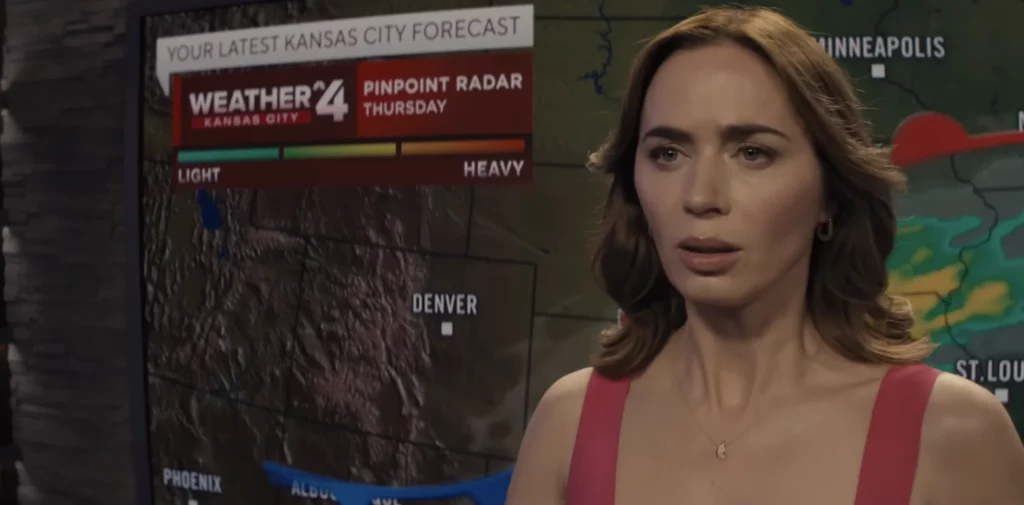
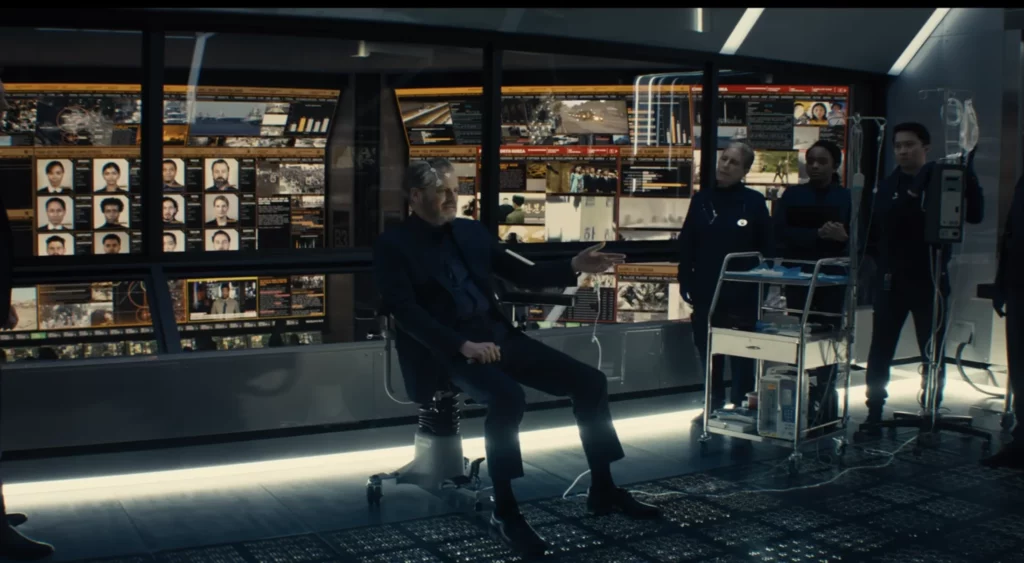
Here’s the premise, spoiler-free. Josh O’Connor plays Dr. Daniel Kellner, a cybersecurity expert who steals classified files proving alien contact is real. He falls in with Margaret Fairchild (Blunt), a meteorologist who starts developing psychic abilities, and the two run from Wardex, a secret agency fronted by Colin Firth’s chilly CEO, Noah Scanlon. Colman Domingo, Eve Hewson, and Wyatt Russell fill out the chase. David Koepp wrote the screenplay from Spielberg’s original story. It runs 2 hours and 25 minutes.
Read that back. It’s a conspiracy thriller. Whistleblowers, stolen drives, a shadowy corporation, a couple on the run. It has more in common with a ’90s paranoid sci-fi than with the film the marketing promised.
Because the marketing promised the other thing. The trailers leaned on the Spielberg alien grammar you already know by heart – the upturned faces, the light spilling over a suburban lawn, the sense that something vast and gentle is about to arrive. That’s the movie people bought a ticket for. What plays is a spy-chase that treats the aliens as the thing you’re running toward the whole time and almost never actually reach. The gap between those two films is the first problem, and it’s the one that never really closes.
Why critics loved it – the case I’m arguing against
Let me make the other side’s argument honestly, because it’s a real one.
Blunt is the best thing here and it isn’t close. Rotten Tomatoes’ own critics consensus singles out her “career-highlight work,” and that’s fair – she plays a woman learning to trust a sense she can’t explain, and she sells the fear and the awe without a single line of clumsy exposition to lean on. Kamiński, Spielberg’s cinematographer for three decades, keeps the camera restless and roving, so even the talky stretches have a nervous forward pull. John Williams’ score does what it always does. And the film means something: it’s reaching for a genuine idea about empathy, about listening, about what advanced intelligence might actually value.
The flagship rave came from RogerEbert.com, where Brian Tallerico gave it four stars and called it the most emotionally riveting film of Spielberg’s career, “propulsive” and alive. That review is the clearest version of the consensus I’m pushing against. And notice – even Tallerico concedes the script “trips over itself trying to explain it all.” The strongest defender of the movie names the flaw in the same breath. Hold that thought.
Flaw one – the bait-and-switch tone
Spielberg’s alien films earn their reputation on the encounter. The moment of contact. The awe. Close Encounters is a two-hour build to a mothership. E.T. is a friendship. That’s the promise the name “Spielberg” plus “aliens” makes, and it’s the promise the trailer cashed in on.
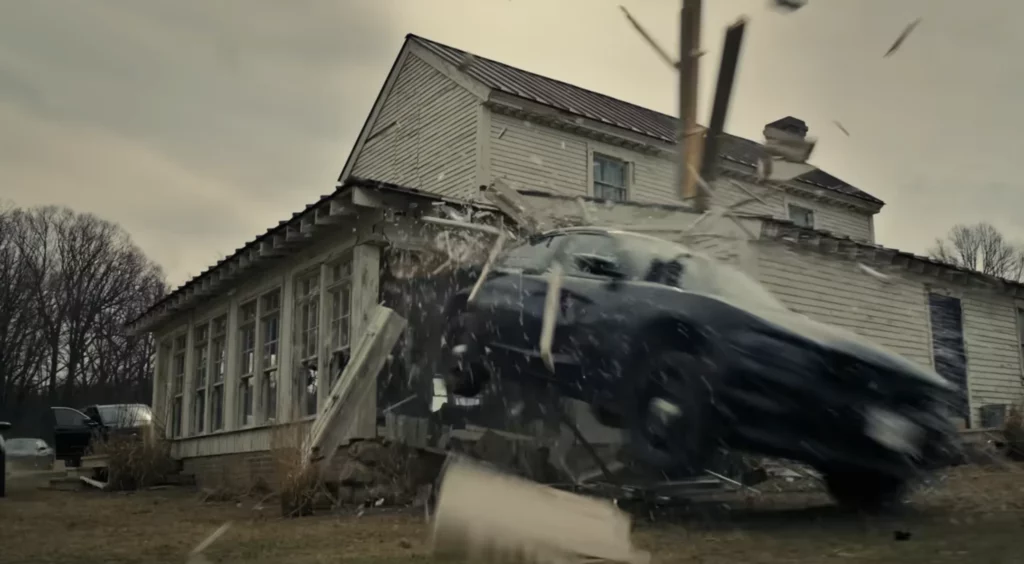
Disclosure Day deliberately skips it. The close encounter – the wonder set-piece the whole genre is built around – is the one scene Koepp and Spielberg step around. That’s a defensible artistic choice on paper. In the theater it plays as a bait-and-switch: you were sold warmth and handed a chase.
And the chase isn’t even a modern one. Strip the alien MacGuffin out and you’ve got X-Files, you’ve got Signs, you’ve got the whole late-’90s conspiracy-sci-fi mood. NPR caught this exactly, calling the film’s pleasures more retro than timely. That’s the trap. The tone whiplashes between the awe the marketing sold and the paranoid espionage the movie actually is, and it never picks a lane. You spend two-plus hours waiting for a Spielberg alien moment that the film has quietly decided not to give you.
Flaw two – the pacing and the plot conveniences
Two hours and twenty-five minutes is a long time to spend on a film with this many moving parts. Disclosure Day runs at least four converging storylines – the whistleblower, the meteorologist, the agency, the chase itself – and it never quite fuses them into momentum with a payoff. It moves. It just doesn’t build.
This is where even the film’s admirers flinch. Remember Ebert’s own concession: the script “trips over itself.” That’s the polite version. The blunt version is that the set-pieces aren’t fun – the chases are frantic without ever being thrilling, motion standing in for tension. And the plot leans on conveniences it never bothers to explain. Characters simply know things – that two strangers are destined to meet, that a door will be open, that the next step will work – and the film asks you to accept the coincidence and keep running.
A tighter cut – twenty minutes leaner, one storyline fewer – might have hidden the seams. At 2h25m they’re all you can see. The film keeps sprinting and forgets to earn the ground it covers.
Flaw three – the ending everyone’s arguing about
Spoilers ahead for the final act. Skip to the next section if you haven’t watched.
Here’s what “Disclosure Day ending explained” is really asking about. The aliens, when they finally appear, aren’t ships or little grey men – they’ve been present as the forest animals all along, the deer and foxes at the treeline. The film’s thesis is that empathy, the capacity to truly listen, is the supreme evolutionary advantage, the thing a higher intelligence would actually prize. In the last beat, the alien whispers something to Daniel, who passes it to Margaret, and the film cuts hard to black on her single word: “Listen.”
Koepp has said that word is the first word of many Hebrew prayers and the first word of Slaughterhouse-Five. He’s also said he knows exactly what the alien whispered and will never tell us. As a closing gesture from a screenwriter, it’s elegant.
As an ending for a room full of people who paid to be there, it’s a wall. Critics read the cut-to-black as the whole point – the film enacting its theme, refusing to over-explain. Audiences read it as being denied the payoff of a two-and-a-half-hour chase, and reports of viewers leaving theaters furious weren’t exaggerated. Both readings are correct. That’s the trouble. An ending that thrills the people paid to admire ambition and enrages the people paying to be entertained is not a triumph. It’s a split, and you should know which side of it you’re likely to land on before you rent.
The receipts – what audiences and the box office already said
Here’s the evidence the 79% quietly steps around.
Start with CinemaScore, the exit-poll grade audiences hand a film on opening night. Disclosure Day got a B – tied for the second-lowest of Spielberg’s entire career, keeping company with Crystal Skull. That’s not a fluke; it’s thousands of people telling you, on the way out, that the movie didn’t land. Rotten Tomatoes tells the same story from a different angle: 70% audience score against that 79-80% from critics. A ten-point gap in the wrong direction is the crowd disagreeing with the room.
Then the money. Disclosure Day made $232.9M worldwide – $113.2M domestic, $119.7M international – which sounds fine until you set it against roughly $195M in costs ($115M to make, about $80M to market) and a break-even estimate near $300M. It didn’t get there. Theater counts fell from 3,824 venues to 1,288 over the run, the drop-off of a film losing its audience fast. This is the same director whose E.T. and Jurassic Park are billion-dollar cultural events. His fourth alien film opened big on his name and then couldn’t hold a crowd.
The “comeback” framing does not survive those numbers. A comeback is a film people can’t stop talking each other into seeing. This is a film people talked each other out of.
The counterargument – “but the craft, the ambition, the sincerity”
The strongest defense of Disclosure Day is the honest one, so I’ll meet it directly: this is a real film, by a master, with something on its mind. Late-career Spielberg working as an essayist – using the alien-movie shape to ask what intelligence and empathy are worth – is a more interesting thing than most summer releases even attempt. Blunt is worth watching. Kamiński is worth watching. The ambition is genuine.
All true. And all beside the point of your $24.99.
Because ambition graded as achievement is exactly how a 79% forms. Critics reward the reach – the sincere theme, the master’s technique, the refusal to pander – and those are legitimate things to admire in a press screening. They are not the same as a film being worth your money and your Saturday. You can respect what a movie is trying to do and still feel cheated by what it delivers. That’s not a contradiction. That’s most of the audience who gave it a B.
Wrap Up
So, is Disclosure Day worth watching? Here’s the clean version.
- Skip the $24.99 buy. Nothing here rewards ownership; you won’t return to it.
- Rent for $19.99 only if you specifically want reflective, essayistic late-career Spielberg, you love Emily Blunt, and you can accept a film that ends on a deliberate non-ending.
- Skip it entirely if the trailer sold you on alien wonder – a warm close encounter, awe, the classic Spielberg contact moment. That film isn’t in here. You’ll spend 2h25m waiting for it and cut to black instead.
The reviews told you Spielberg was back. The B CinemaScore, the 70% audience score, the bait-and-switch tone, and the box office that stalled short of break-even tell a plainer story: a gifted, sincere, frustrating film that critics graded on ambition and audiences graded on their evening. Trust the room that paid.
Frequently asked questions
Is Disclosure Day worth watching?
Only conditionally. Skip the $24.99 purchase. It’s worth a $19.99 rental if you want reflective late-career Spielberg and Emily Blunt’s excellent lead performance, and you can accept a deliberately abrupt ending. If you wanted the warm alien-wonder the trailer promised, skip it – the film is a paranoid spy-chase that never delivers that.
What is Disclosure Day’s Rotten Tomatoes score?
Disclosure Day holds a Tomatometer around 79-80% from critics against a much cooler 70% audience score. That gap is the story. Critics rewarded the craft, the ambition, and Emily Blunt’s performance; paying audiences were more divided, a split echoed by its B CinemaScore on opening weekend.
Where can I stream Disclosure Day?
It’s been available on premium video-on-demand since July 21, 2026, across Prime Video, Apple TV, Fandango at Home, and YouTube Movies & TV. Pricing is $24.99 to buy or $19.99 for a 48-hour rental. There’s no ad-supported or subscription streaming home for it yet, so any watch means paying.
What happens at the end of Disclosure Day?
Spoiler: the aliens turn out to have been present as forest animals, and the film’s idea is that empathy – truly listening – is the ultimate evolutionary advantage. An alien whispers to the leads, and the film cuts to black on Margaret’s line, “Listen.” Screenwriter David Koepp knows what was said but won’t reveal it. Critics loved the choice; many audiences felt cheated.
How long is Disclosure Day, and who’s in it?
It runs 2 hours 25 minutes. Steven Spielberg directs from a David Koepp screenplay based on Spielberg’s story, with Janusz Kamiński shooting and John Williams scoring. The cast is led by Emily Blunt and Josh O’Connor, with Colin Firth, Colman Domingo, Eve Hewson, and Wyatt Russell. It reached theaters on June 12, 2026.