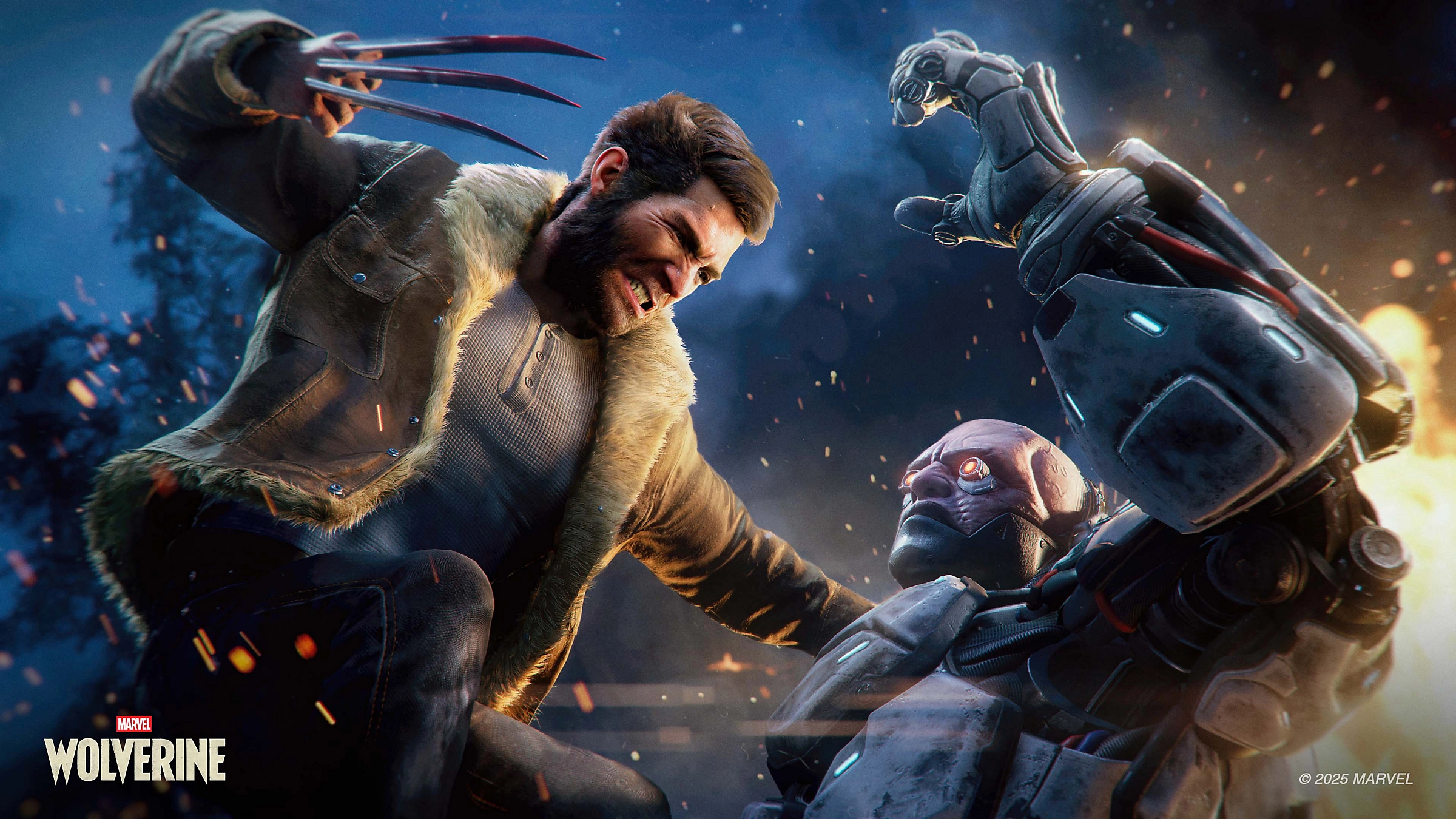

Logan’s entire appeal is that he doesn’t stay down. Hurt him and he gets angrier, and angrier Logan is more dangerous Logan. Insomniac has finally turned that into a control scheme rather than a cutscene, and it is the single most interesting combat idea the studio has put on screen since Spider-Man 2’s web wings.
Now the honest part, because this is a Marvel’s Wolverine review written four weeks early: nobody has reviewed this game, including us. What exists in public is a roughly two-hour slice of the first act that Sony chose and curated for press on August 13, 2026, plus Insomniac’s own hands-on write-up of that same slice. No scored review exists anywhere. Sony hasn’t announced a review embargo date.
So this piece does the thing the preview wave mostly didn’t: it separates what those two hours actually prove from what nobody on earth can know yet, and then tells you whether to spend $69.99 on September 15.
The verdict, four weeks out
The Rage Tier system deserves your attention, and dropping the open-world scaffolding is the right call rather than a downgrade. Insomniac is making a linear, narrative-driven, single-player action game on purpose, and the previewed combat looks built for exactly that shape. If Insomniac’s combat design is a big part of why you own a PS5, pre-order and enjoy yourself.
Everyone else should wait, and waiting costs you nothing. A PS5 exclusive with a confirmed date is not going to sell out, prices don’t spike, and the review embargo will land before or around launch. Sony’s silence on that embargo is the most useful data point available today. Publishers confident in a score announce review timing early; publishers who aren’t let previews carry the month. That’s not proof of a bad game. It is a reason to keep your $70 for one more week.
What Marvel’s Wolverine on PS5 actually is (and what it deliberately isn’t)
Judge this game against Insomniac’s stated brief, not against Spider-Man’s. That’s the only fair reading, and it’s the one nearly every explainer ranking for “is Marvel’s Wolverine open world” skips past.
Insomniac’s own pitch
Marvel’s Wolverine is a single-player, narrative-driven action-adventure. It is not open-world. Game director Mike Daly has framed the goal as a high-octane, high-intrigue, linear single-player adventure, which is about as clear a design statement as a studio ever gives you. It’s also planned as the first entry in a broader X-Men-focused series, so structural choices here are foundations rather than one-offs.
That matters for expectation-setting. Two Spider-Man games and a Miles Morales spin-off trained a very large audience to equate “Insomniac Marvel game” with “swing across a borough, clear map icons, fight a crime wave.” None of that is on the table. If you liked those games mainly for traversal, read the skip-it section below before you commit.
The premise, spoiler-free
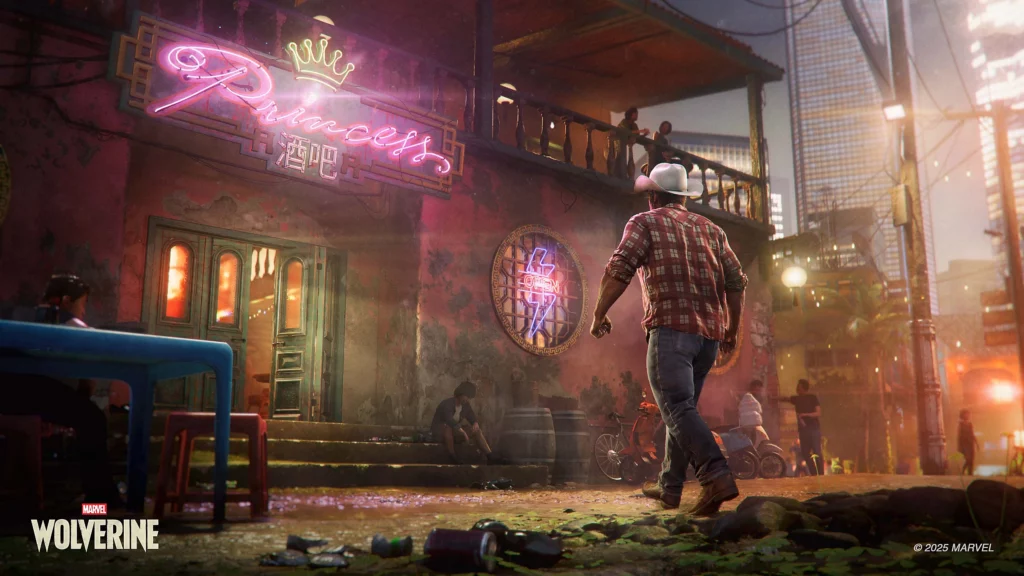
The official setup is tidy: Logan thought he was finished being Wolverine, but the past wasn’t finished with him. Three years after walking out on the mutant task force Team X, he rejoins them in their darkest hour, with Bolivar Trask abducting mutants and the Reavers in the mix. Locations span Canada, Japan and Madripoor, and the previewed slice put players in Telambang, Madripoor’s Lowtown and the Princess Bar.
Madripoor is the smart pick. It’s a lawless port city with a long comics history of being exactly Logan’s kind of terrible neighbourhood, and it gives a linear game a reason to feel dense rather than empty.
Who’s steering it now
Liam McIntyre plays Wolverine. Troy Baker is Nathaniel Essex, better known as Mister Sinister, Kelly Hu plays Tyger Tiger and Krizia Bajos plays Jean Grey. That’s a serious voice cast for a first-of-series title.
The leadership history is worth knowing, though, because it’s the one thing the marketing page won’t tell you. Creative director Brian Horton left in summer 2024 for Xbox Game Studios, with Marcus Smith taking creative direction and Mike Daly serving as game director. Before that, in December 2023, Insomniac was hit by the Rhysida ransomware attack that compromised development documents, footage, concept art and employee data. A studio absorbing a breach and a creative-director handover mid-project usually ships something different from what was first planned. That’s not a prediction of quality. It’s a reason to check the finished thing rather than the pitch.
The Rage Tier system: the reason to care about Insomniac’s Wolverine on PS5
Here’s the mechanic, and it’s all straight from Insomniac’s own hands-on report rather than a rumour mill.
Three tiers, and the one that changes everything
Rage builds through three tiers as Logan fights. Hit Tier 2 and Last Stand unlocks, letting him spend rage to heal his body if he’s fully downed. Hit Tier 3 and his attacks get significantly stronger, with brutal critical strikes becoming available.
Read that structure again, because it inverts the standard superhero combat contract. Most of these games reward precision: dodge cleanly, keep the combo alive, never get hit. This one rewards escalation. Getting hurt is how you fund the good stuff, and the fail state is partly a resource. A healing factor that only becomes a mechanic once you’ve earned enough rage is the rare case of a comic-book power translated into a system instead of a cinematic.
The obvious risk is that escalation systems get solved. Once players learn that Tier 3 makes everything trivial, the interesting middle band of a fight can collapse into a rush toward the payoff. Whether Insomniac has priced that correctly across a whole campaign is precisely the thing two curated hours cannot answer.
Techniques and Adaptations
Techniques are upgradeable moves mapped to the directional buttons, with Tornado Spin cleaving through groups and Knee Breaker interrupting incoming attacks. Adaptations sit underneath as the longer-term layer, affecting skills like Logan’s health and his rage meter.
It’s a two-speed build system: swappable verbs on the d-pad, slow structural growth in the background. Sensible, familiar, and the kind of thing Insomniac has been good at for a decade. Nothing here is a reinvention, which is a phrase that ran through the whole preview wave for a reason.
The lunge, and the quiet option
Wolverine catapults himself at enemies, targeting and launching himself from across the room to stun or barrage. That’s the traversal-in-combat answer to having no web-swinging: distance closes violently instead of gracefully.
There’s also a stealth line. Enhanced Senses let Logan track and take down enemies more quietly, which suits a character who is genuinely better at ambush than most of his adaptations admit. Officially the pitch is that you can stalk, ambush or overpower, and having the third option available at all times is what should keep this from feeling like a stealth game with a fail state.
Where the previews already smell like a problem
Every review needs its downside section, and here the downsides are structural and evidentiary rather than experiential. Four of them, none invented.
Targeting in crowd fights
The most specific criticism to come out of the August preview wave concerned targeting. Eurogamer’s preview, which went live ahead of the embargo, flagged trouble locking onto the enemy you actually wanted during large crowd fights. We haven’t played it, so we’re passing that on as a reported observation, not a finding of our own.
It’s the one worth watching, though. A combat loop built on nonstop momentum and cross-room lunges is exactly the design where a mistargeted input hurts most – you don’t just miss, you launch yourself into the wrong half of the arena and lose the rage economy you were building. Fixable in a patch, entirely plausible as a launch complaint.
Nightmare Doors and the padding question
Nightmare Doors transport Logan to a dreamlike cabin to take part in a Nightmare Trial, described officially as timed speed trials that reimagine locations into a vertical fever dream. Conceptually great. Mechanically, timed challenge rooms in a linear narrative game are a padding pattern with a long history, and the preview consensus treated them as a pleasant diversion whose reward is a piece of world-building rather than something that changes how you play.
Collectibles follow the same pattern: crates of upgrade material, plus collectable whisky bottles. Very on-brand. Also very much the optional-content furniture Insomniac has leaned on before.
A curated two hours is not evidence of pacing
This is the biggest flaw in every preview published this month, including Sony’s own. A publisher-selected first-act slice is designed to show a combat system at its best. It tells you almost nothing about hour eight, about mission variety, about whether the linear structure keeps finding new shapes, or about the boss design. Anyone writing confidently about how Marvel’s Wolverine “plays” from that sample is describing a demo.
No performance details, at all
Sony’s hands-on report says nothing about performance modes, frame-rate targets or ray tracing. The store listing confirms PS5 and PS5 Pro Enhanced, and that’s the extent of first-party detail. There’s an aggregator headline or two claiming a 60fps ray-tracing mode; treat that as unconfirmed until Insomniac says it. For anyone who bought a PS5 Pro specifically for this class of exclusive, that gap is a real one four weeks out.
Wolverine PS5 length: the honest answer is that nobody knows
Campaign length is unconfirmed. Insomniac hasn’t stated one, Sony hasn’t published one, and the store page doesn’t imply one.
The only figure circulating came out of the December 2023 ransomware leak, which is a dated internal document from before a creative-director change, describing a build that no longer exists in that form. That’s not a spec sheet, and we’re not going to quote it as one.
Here’s why the question matters more than usual. In an open-world game, length is elastic – the campaign is a spine and the map absorbs your remaining hours, so a short story mode still reads as a full-price product. Strip the open world out and the campaign is the product. A linear action game with a lean runtime and no map to wander lives or dies on whether every hour is worth playing.
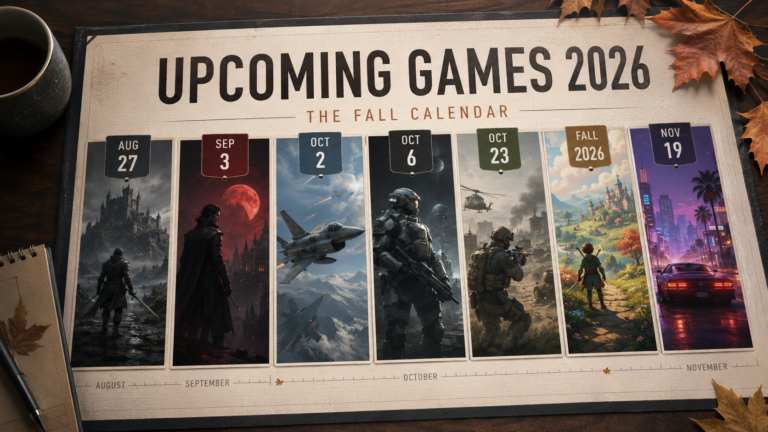
That’s the number to look for the moment reviews land, and it should carry more weight in your buying decision than any score. If you’re building a shortlist by hours-per-dollar this autumn, our rundown of the rest of fall 2026’s release calendar is a better planning tool than a pre-order button.
Is Marvel’s Wolverine worth it at $69.99? What you’re actually buying
| What you get | Price | Worth it for |
|---|---|---|
| Standard Edition (PS5) | $69.99 | Almost everyone – this is the game |
| Digital Deluxe Edition | $79.99 | Only if the extras are announced and you want them before you know the game is good |
| Standard-to-Deluxe upgrade | $10 | The patient route: buy Standard, upgrade later if you love it |
The $10 upgrade path is the quiet best answer here, and it’s the reason we’d steer almost nobody toward the Deluxe up front. Buy in at $69.99, decide after ten hours whether you want the rest, pay the difference then. Committing an extra tenner to bonus content for a game with no reviews is exactly the kind of small, avoidable overspend the pre-order economy runs on.
Some hard facts for the value question. It’s a PS5 exclusive, PS5 Pro Enhanced, with no announced PC or Xbox version. The official PlayStation store listing carries an ESRB Mature rating with descriptors for Blood and Gore, Drug Reference, Intense Violence, Partial Nudity and Strong Language. That descriptor list is the clearest tonal signal Sony has given: this is not a family-friendly Marvel game, and the rating is doing marketing work as much as compliance work.
The commercial context nobody puts in the reviews
Two numbers frame Sony’s position. PS5 shipments reached 95.3 million units as of June 30, 2026, so the install base is enormous. But quarterly shipments in Q1 FY26 came in at 1.6 million, down 36.0% year on year, which is a console deep into the back half of its cycle.
Then there’s the bar. Marvel’s Spider-Man 2 sold 2.5 million units in 24 hours and 5 million in 11 days, and had passed 11 million by April 20, 2024 – the last officially confirmed first-party figure, with third-party analysts at Alinea Analytics estimating around 18.2 million and roughly $1.2 billion in revenue as of August 2026. Those are estimates, not Sony numbers, and should be read as such.
An M-rated, linear, non-Spider-Man exclusive launching into a late-cycle console is a genuinely riskier commercial bet than the marketing suggests. That doesn’t affect whether the game is good. It does explain the intensity of the preview push, and it’s worth understanding before you read a hands-on piece produced under access-partner conditions. If you’re weighing $70 against subscription value instead, our breakdown of Game Pass vs PlayStation Plus in 2026 covers the maths on that trade.
Skip the pre-order if…
This is the section the access-driven coverage won’t write. Skip it if any of these describe you:
- You wanted a city to roam. There’s no open world and no map to fill. That’s a design choice, not an oversight, but it’s a dealbreaker for some people and it should be.
- Spider-Man’s traversal was the appeal. There is no traversal loop here. Lunging across a room is combat, not commuting, and the moment-to-moment feel will be closer to a grounded brawler than to swinging.
- You’re waiting on PC. It’s PS5-exclusive with no announced port. If your gaming lives on a PC or a handheld like the hardware we covered in a month with Valve’s Steam Machine, there is nothing to pre-order.
- You want a confirmed campaign length before spending $70. Entirely reasonable, and you’ll have that number the day reviews land.
- You can absorb one week of patience. No pre-order bonus is worth more than a verified score on a linear, story-led game.
Buy it day one if Insomniac’s combat design is why your PS5 is plugged in, and if a system that rewards escalation over precision sounds like your kind of loop. That’s a real audience and it’s going to have a great September.
Wrap Up: what we’ll be watching on September 15
Logan works as a character because he can’t stay down, and Insomniac has built a combat system out of exactly that. Turning a healing factor into a rage economy is the most inventive thing in this project, and it earns real excitement independent of the marketing.
But this Marvel’s Wolverine review is provisional by design, and we’d rather say so than pretend two curated hours are a playthrough. Three things will decide it:
- Does Tier 3 still feel good in hour twelve, or does escalation solve the game?
- Does targeting hold up in crowds, given the reported wobble in preview builds?
- Does the campaign justify $70 without an open world to pad it?
Pre-order if you’re already in. Wait if you’re not, and watch for the review embargo announcement, because when that lands – and how close to launch it lands – will tell you plenty on its own. We’ll be playing it at release and updating this with a full played verdict.
Until then, worth a look through our other game and hardware verdicts before you spend: the reviews hub is where the played-through takes live.
Frequently Asked Questions
Are Marvel’s Wolverine reviews out yet?
No. As of mid-August 2026 no scored reviews exist and Sony hasn’t announced a review embargo date. What went live on August 13, 2026 was a preview embargo, based on roughly two hours of hands-on with a publisher-curated slice of the first act. Aggregators still list the game as upcoming.
When does Marvel’s Wolverine come out?
September 15, 2026, exclusively on PS5, with PS5 Pro Enhanced support. Sony announced the late-2026 window at a State of Play on September 24, 2025 and confirmed the exact date on February 24, 2026. The game was first revealed at the PlayStation Showcase in September 2021.
Is Marvel’s Wolverine open world?
No. It’s a linear, narrative-driven single-player action-adventure, and that’s deliberate – game director Mike Daly has described the goal as a high-octane, high-intrigue linear adventure. Locations span Canada, Japan and Madripoor, but you won’t be roaming a connected city clearing map icons.
Is Marvel’s Wolverine a sequel to Marvel’s Spider-Man 2?
Not a sequel, no. It shares the developer, Insomniac Games, and was announced alongside Spider-Man 2 at the September 2021 PlayStation Showcase. It’s a standalone story planned as the first entry in an X-Men-focused series, with a different structure and a Mature rating.
Is Marvel’s Wolverine coming to PC or Xbox?
Not at launch. It’s a PS5 exclusive published by Sony Interactive Entertainment, and no PC or Xbox version has been announced. Sony has previously brought Insomniac’s Marvel titles to PC after a delay, but nothing has been confirmed for Wolverine. If PC is your platform, there’s nothing to pre-order.
Why is Marvel’s Wolverine rated Mature?
The ESRB rating carries descriptors for Blood and Gore, Drug Reference, Intense Violence, Partial Nudity and Strong Language. That’s a deliberate tonal break from Insomniac’s Spider-Man games, and the clearest signal available that this is a violent, adult-facing take on the character rather than a family Marvel game.